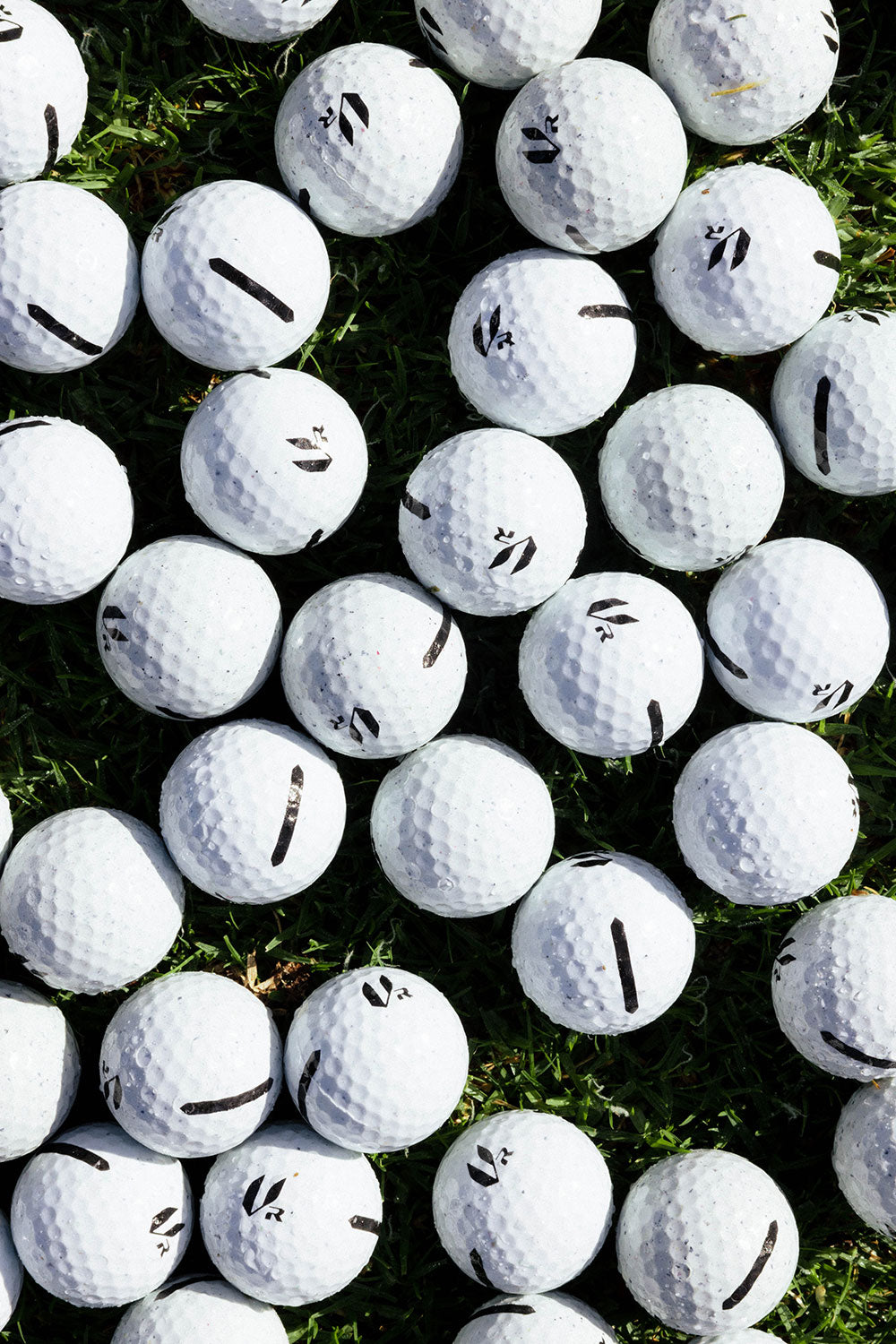
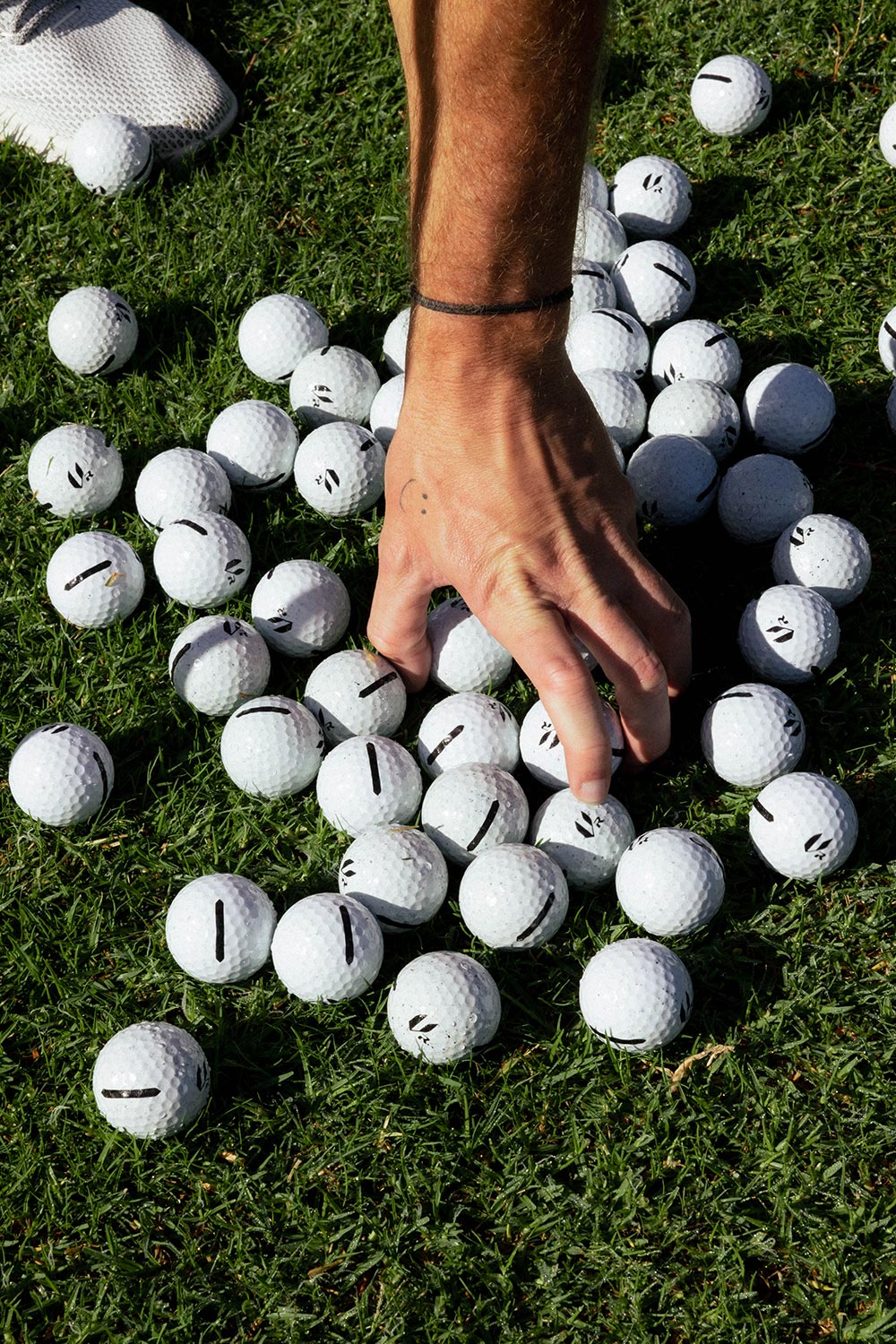
A range goes through balls the way a course goes through tees. Some are lost to the bush, the ponds and the mower. The rest wear out: cracked, cut and split by thousands of strikes.
Nobody keeps an official count for New Zealand. The ranges we talk to lose a real share of their balls every year, and retire more as they wear.
LostIn the bush, at the bottom of the pond, under the mower.
WornCracked, cut and split from repeated strikes.
BinnedRetired balls with nowhere to go but landfill.
02What a ball is
One study · five coastal courses
50,681
golf balls, about 2.5 tons, were retrieved from the shore and shallow water beside, or downriver from, five golf courses in Carmel, California, between May 2016 and June 2018.
The researchers named golf balls a new source of debris in the sea, and said the microplastic they lose as they break down may be of concern.
A golf ball is rubber and plastic. Nobody has measured how long one takes to break down. When a range ball is finished, it usually goes in the bin, and from there into the ground.
It does not have to. A used ball can be taken apart. Its cover comes off, and what was waste goes into a new ball.
03The ball
Two pieces. Like the one you play.
Most range balls are one piece of hard plastic, made to survive the basket, not to fly like the ball in your bag. Low launch, odd spin, carry you cannot trust. Every rep with one teaches you the wrong number.
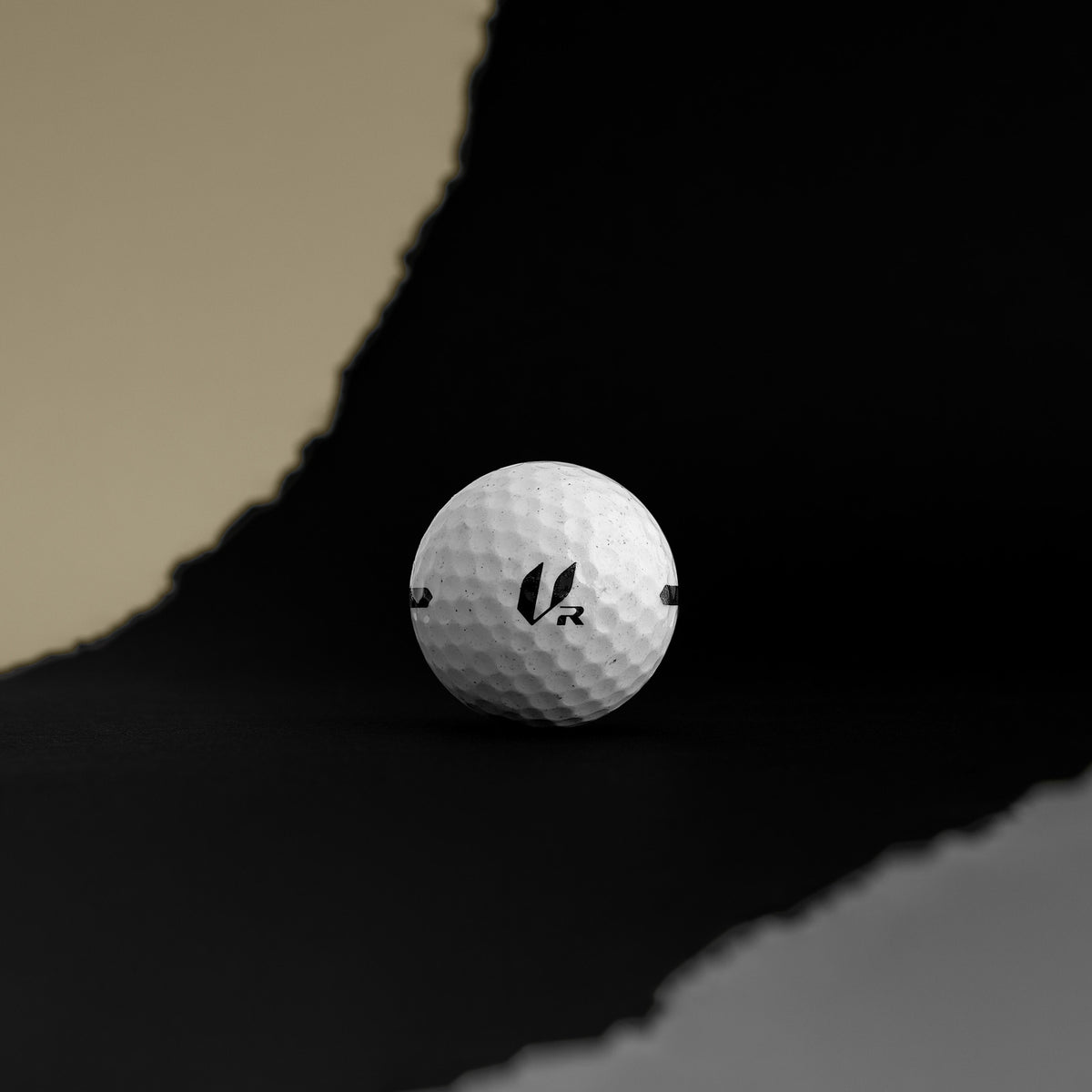
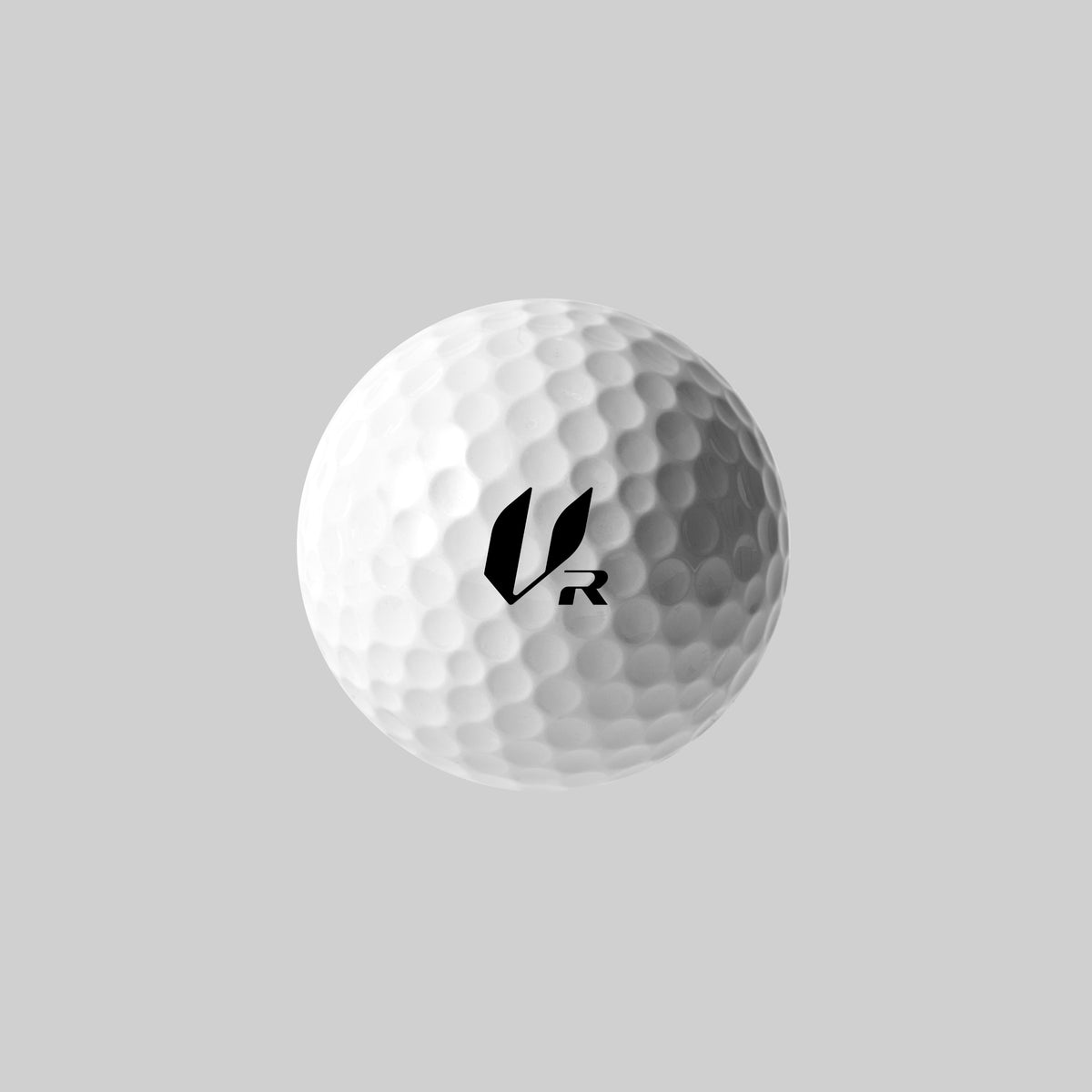
Vollē R is two pieces, a core and a cover, like the ball you tee up on Saturday. The core is recycled polybutadiene, with the feel and the speed left in. 352 bee-panel dimples send it up on a high flight. What you see from the mat is what you take to the course.
04Two editions
Eco and Premium.
Same core, same dimples, same numbers. The difference is the cover. Eco is about 90% recycled, for ranges that go through balls by the thousand. Premium puts a new Surlyn cover on the recycled core, for coaching bays and balls that carry a logo.
Eco Edition
About 90% recycled.
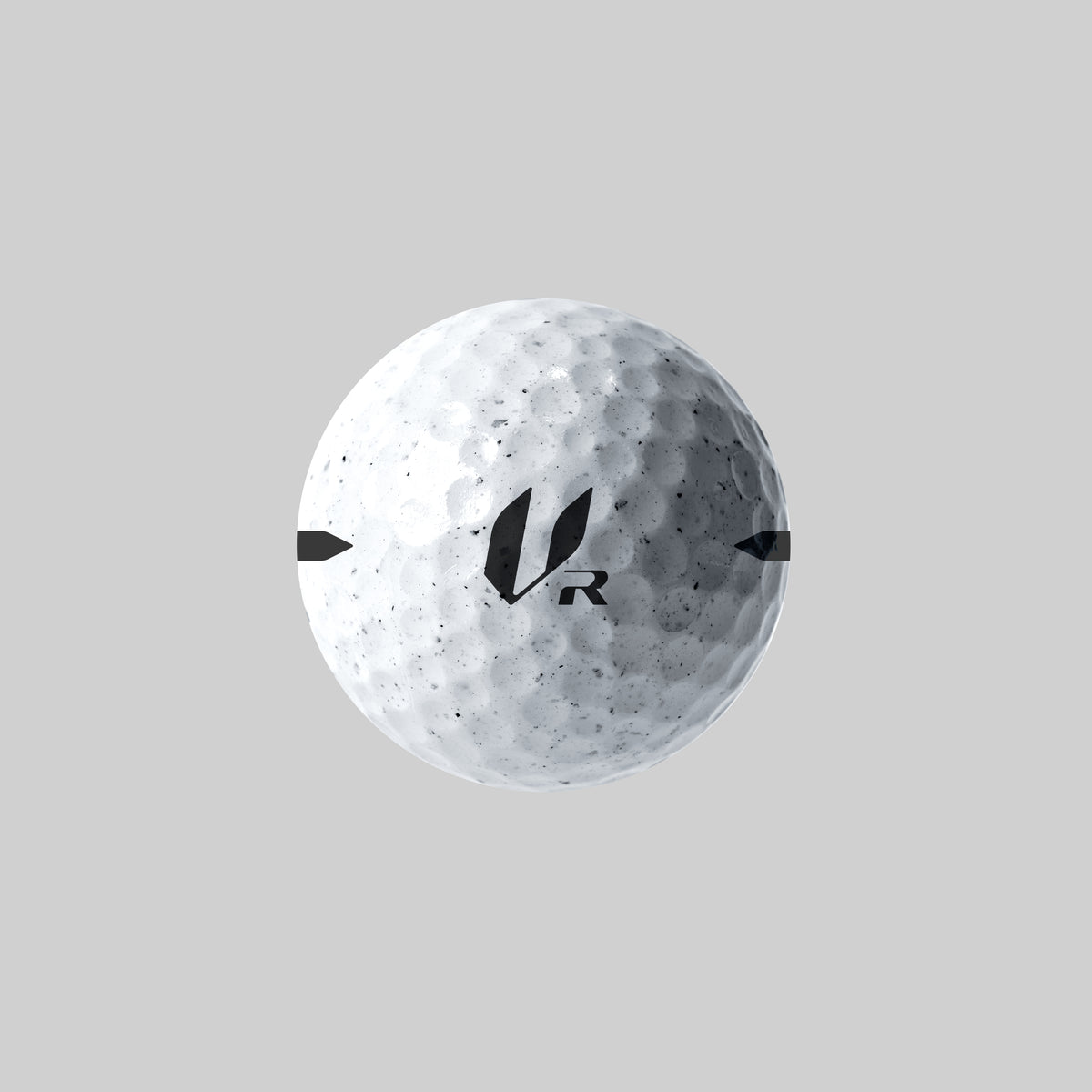
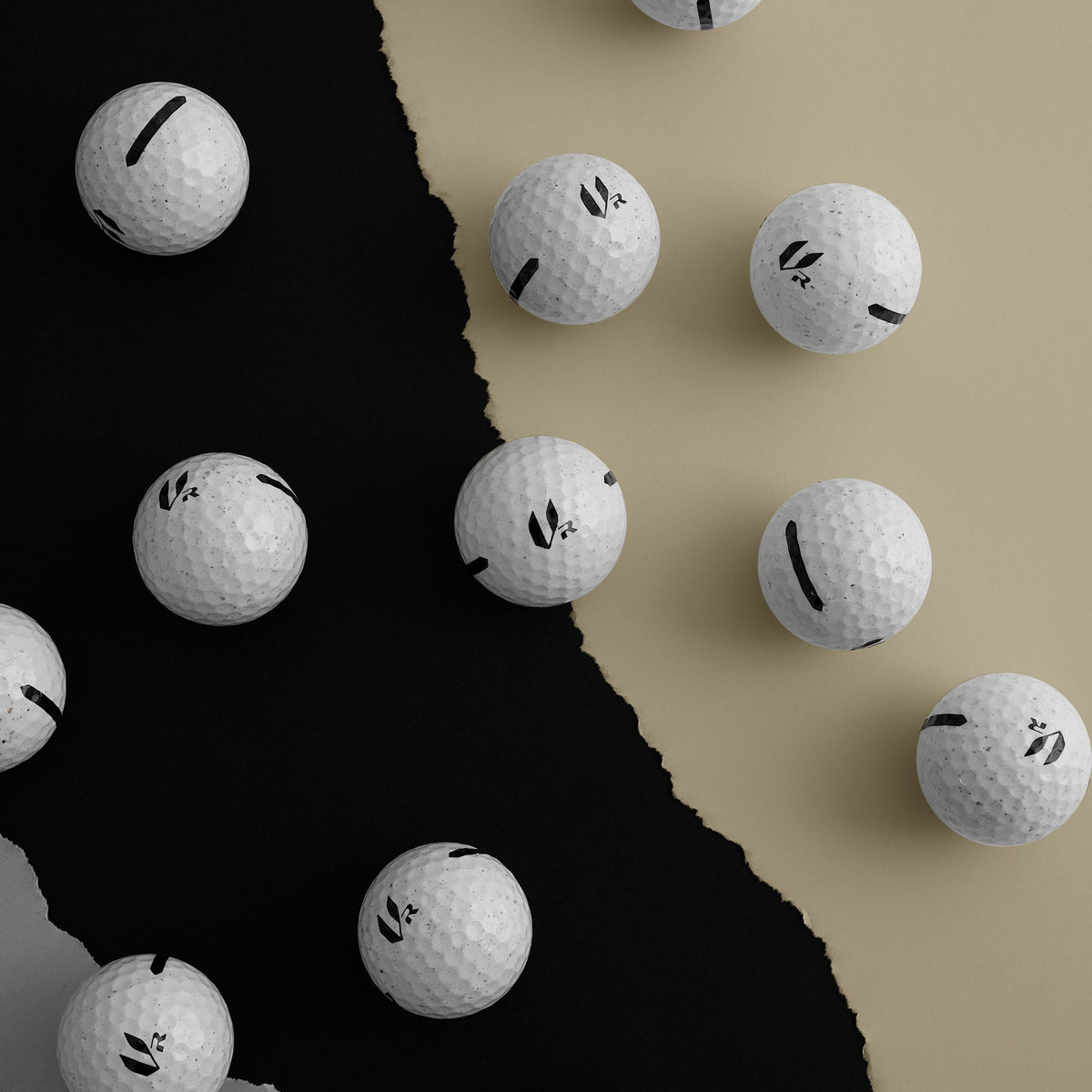
Used golf balls, made again. The old covers come off and the ball is rebuilt: a recycled cover over a recycled core. Specks in the cover show where it came from.
CoverEco ionomer mix, recycled. Grip and control around the green, distance off the tee.
CoreRecycled polybutadiene. Feel and speed kept.
Dimples352, bee-panel, for a high flight.
Eco whiteEco yellow
Premium Edition
A new cover on a recycled core.
A blend of Surlyns, new, over the same recycled core. The cover comes in a clean white or yellow, ready for a club or brand logo.
CoverNew Surlyn, 2 mm thick.
CoreRecycled. Feel and speed kept.
Dimples352, bee-panel, for a high flight.
WhiteYellow
The numbers.
From the Vollē R specification. For range managers who want to know what goes in the basket.
SpecEco EditionPremium Edition
ConstructionTwo piecesTwo pieces
CoverEco ionomer mix, recycledSurlyn mix, new
CoreRecycled polybutadieneRecycled polybutadiene
Compression90 (±5)90 (±5)
COR0.720.72
Cover thickness2 mm2 mm
Dimples352, bee-panel352, bee-panel
Breaking point200+200+
ColoursEco white, eco yellowWhite, yellow
Side stampRANGERANGE
Your logoYes, club or brandYes, club or brand
Your range, on every ball.
Both editions take your club or brand logo. Every ball carries the RANGE side stamp, so everyone knows where it belongs.
This is where we are heading. It is not running yet.
Your range would always have fresh balls. Every worn ball would be made into a new range ball.
Here is how it would work, step by step.
01
You would start with fresh balls.
We would work out with you how many balls your range goes through. Your range would then get the Vollē R it needs to begin: Eco or Premium, with your mark if you want it. That first delivery would be the stock your players hit.
02
Worn balls would come back to us.
Range balls wear out. As yours get scuffed, cut and tired, your team would pull them out of play and box them up. You would send the box to us, or we would collect it. How often would depend on how busy your range is.
03
Fresh balls would go out in their place.
You would not wait for your own balls to be remade. Fresh balls would go out to you when the worn ones come back. Balls lost along the way would be made up too.
04
The worn balls would be remade.
This part would happen away from your range, separately. The worn balls would be taken apart and made into new range balls, so they stay out of the ground. None of it would hold up your range.
05
Your bill would be steadier.
It would run as a subscription. Smaller, regular payments through the year would take the place of one large order. Each ball you send back would earn a credit, and that credit would come off your bill.
Any ball could come back.
Not only ours. Range balls, or balls from a player's bag, of any brand. A range coming in could hand over its old stock, and it would be made into new range balls as well.
Ranges and clubs: tell us roughly how many balls you go through and we will come back with options. Players: tell us where you practise and we will take it from there.